
I’m thinking about Trading this week, mostly because I remembered to go through some “dead” exchanges and wallets to see if there was anything in them.
The coins I found made me laugh (anyone want 3 MetaMask wallets with less than $1 of shitty coins in each?), but there were a few dollars of ETH and BNB (that I only use to pay for transfers) that I moved and converted to USDT, which in turn made me wonder what to trade.
And from there, I started thinking about my trading strategy.
Trading Strategy
For new traders, most articles tell you the same things: do the analysis, do the research, don’t get emotional, have a strategy, yada yada yada. None of them actually tell you how to do any of that, of course, but it’s still a good starting point.
My approach to trading uses those guidelines – though my “analysis” is mostly following a 4h or 1d chart with my finger (while making whooshy noises) and seeing where my brain says the pattern is going – and adds some other requirements:
- I try to make choices that are ethical and ideally embrace the original crypto ideology
- I avoid megacorps, the Establishment, and dodgy-ass scumbags out for profit at others’ expense
- I avoid privacy coins
- I avoid memecoins and presales
- I try to stick to bigger coins, trade short-term, but have a couple of longer-term “growth” options
The 1st of those means I won’t touch proprietary coins like Disney’s DRGN (when it was launched internally, before it went open source and died) or XRP (the definitive proprietary coin). What’s the point of a crypto that’s manipulated by the people who made it, for their own purposes?
The 2nd means I won’t touch BNB (the Amazon of crypto, in all the worst ways), XRP (proprietary, Establishment pet, one of the devs launched XLM precisely because XRP is so ugly), TRX (Justin Sun, ’nuff said) and others.
The 3rd means no Monero, Zcash, DASH and others, because those are prime targets for governments to shit on the instant they decide they don’t like people moving money without being tracked (don’t get me started on the nonsense that are KYC and AML). One bad move from regulators and they’ll crash.
The 4th means no PEPE, SHIB, MaxiDOGE, PepeNode or others like them. I avoid memecoins because I always – infallibly – choose the wrong ones or get in too late. For example, the 3.6 billion BabyDoge I found in those old wallets are no use to me or anyone else, and the 2.5 million SHIB aren’t much better. The same goes for presales: the blurbs always say much the same things (especially since AI can generate complete bollocks for free), it’s a total crap-shoot (as the Yanks would say) which ones will actually take off, and I’ll almost certainly choose the wrong one(s) and end up with a pile of worthless junk or get rugged. I’ll stick to coins that are listed on exchanges and have some trading history, thank you.
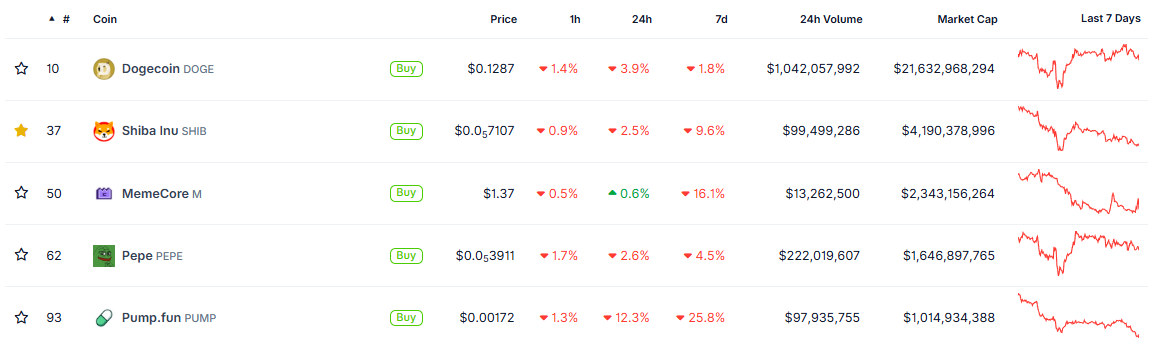
The last one is pure preference. In the short term, mid-cap and small-cap coins can move MUCH more than the big names, but – as with memecoins – I’m almost guaranteed to choose the wrong ones. It’s tougher to get a 5% gain on BTC or ETH, though, so I do aim at some smaller, well-established coins with actual utility, like GRT, SUI and others (as I mentioned in a previous post). I rarely hold anything for very long, except for banking, but I do occasionally like to look ahead and pick a couple of promising coins to hold for a bit longer – there’s still a small piece of me that would love a 10x.
Those are my “rules”, such as they are.
For strategy, I find that beginner-level ideas work well and that the pros and experts absolutely LOVE to talk in their own weird language, like lawyers, more to feel important than to actually provide any useful information. I was following an exception to that rule here on p0x, with two simple posts per week, but he’s since started posting a lot more, discussing stocks a lot more than BTC, and talking gibberish that means nothing to me as a beginner. So I only follow him now (here) for a general feel of the market in his Sunday post. Still very useful as an overview of what’s going on, with an excellent summary of thoughts about BTC price movements each time.
In the end, the only thing that matters with trading is to buy lower than you sell. That’s it. You don’t have to get too clever about it.
Trading Tools
Honestly, I don’t use many trading tools. I look at market charts – usually the 4h one, with a check on the 1h chart if a coin’s in a volatile mood – to figure out roughly where things are going, then decide whether it’s worth a shot.
For research, the best places to start are CoinGecko, CMC, and the search engine of your choice. I don’t bother too much with research unless I’m looking for something to invest in for a while: it’s very unusual for me to hold anything for more than about a month, as I’m mostly looking for an exit with a price rise of a few percent (which is where setting TP comes in). Part of me still wants to find those 10x, 100x, 1,000x coins but the sensible me knows that’s extraordinarily unlikely to happen, so I take my 1%, 3%, 5% gains and smile.
For anyone who wants to take trading seriously, the first step is to learn technical analysis (TA). There’s an excellent free course at IG Academy for that. To be blunt, I think TA’s overrated on its own, especially in crypto, as pretty much every “signal” can go either way. It’s best when mixed with fundamental analysis (news, market situation, that sort of thing), which you can get from most crypto news outlets.
The Crypto FaG Index is an essential. Although it’s a measurement in hindsight, it’s still a helpful pointer to which way things are looking, especially if you check daily.
I also have a couple of technical sites bookmarked for BTC prices. There’s a very cool one at TradingView that summarises all the TA indicators and gives you a speedometer indicator to buy or sell on given timelines. They do the same for other major coins (ETH, SOL, etc.), Then there’s a list of TA indicators at barchart, which gives more insight. They also cover other major coins.
Above all, the barchart page has the incredibly useful “Support & Resistance” list over on the right. That’s an absolute godsend for amateurs like me who have no access to pro tools, but who want an idea of where to set buy and sell prices (in the short term, as those numbers frequently change in a day or less). To be completely honest, I’ve made some of my best BTC trades based on those numbers, and continue to do so!
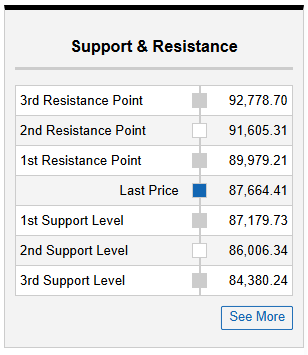
The “See More” button on that chart has a lot more info, which goes way beyond anything I need. I simply use the 1st/2nd levels on both sides to figure out where to put my buys and sells – 1st most of the time, 2nd if things are particularly volatile.
Apart from those tools, I find one of my most useful habits is NOT visiting crypto news sites, opinion sites, and other analysis pages. It’s so easy to forget that 99% of what you read online is opinion, usually paid for by sponsorship, and is far more likely to mislead you than help (especially when you add confirmation bias). At the very least, it confuses the crap out of amateur traders like me!
Do you use any trading tools? Got any pointers for useful pages or apps? I’d love to hear about them!